
Honey Bee Industry Update
The latest USDA-NASS report highlights stronger colony growth, continued dominance of Varroa mites as a stressor, and mixed trends in colony collapse disorder losses.

U.S. honey bee colonies climbed 6.3% to 2.81 million as of January 1, 2026, adding 166,070 colonies from a year earlier, signaling broad national expansion despite declines in several major beekeeping states.
Texas led the increase with 63,000 additional colonies, while Louisiana (+47,000; +123.7%), Mississippi (+35,000; +140.0%), Montana (+27,000; +90.0%) and Oregon (+36.8%) posted the strongest percentage and numerical gains.
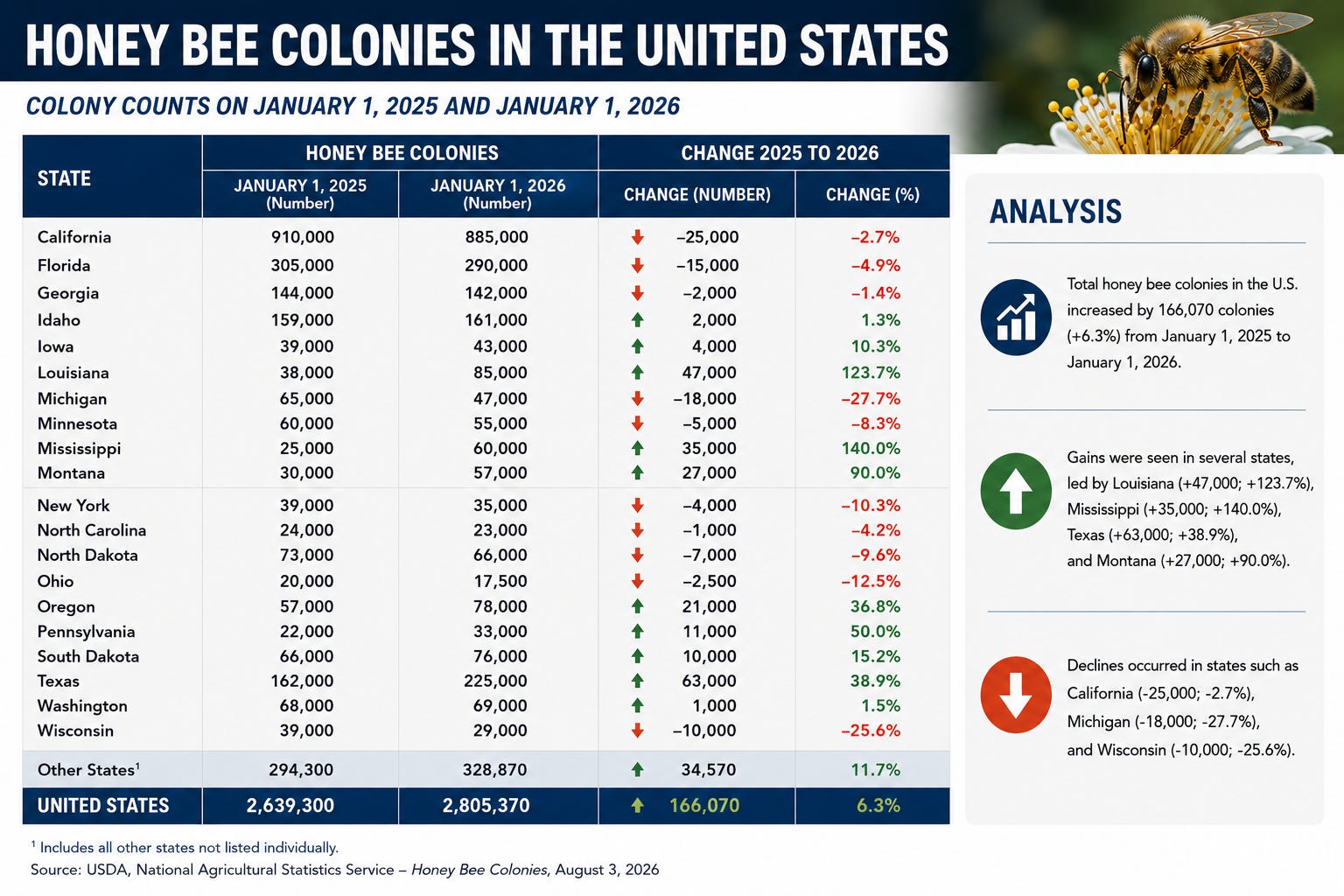
California, the nation’s largest beekeeping state, remained dominant at 885,000 colonies but recorded the biggest absolute decline (-25,000), with Michigan (-27.7%), Wisconsin (-25.6%) and New York (-10.3%) also posting notable contractions, according to the U.S. Department of Agriculture’s National Agricultural Statistics Service Honey Bee Colonies report released this week.
Varroa mites remained by far the most widespread threat to U.S. honey bee colonies during the second quarter, affecting 22.2% of operations, while other pests and parasites and pesticide exposure each impacted 5.2% of colonies nationwide.
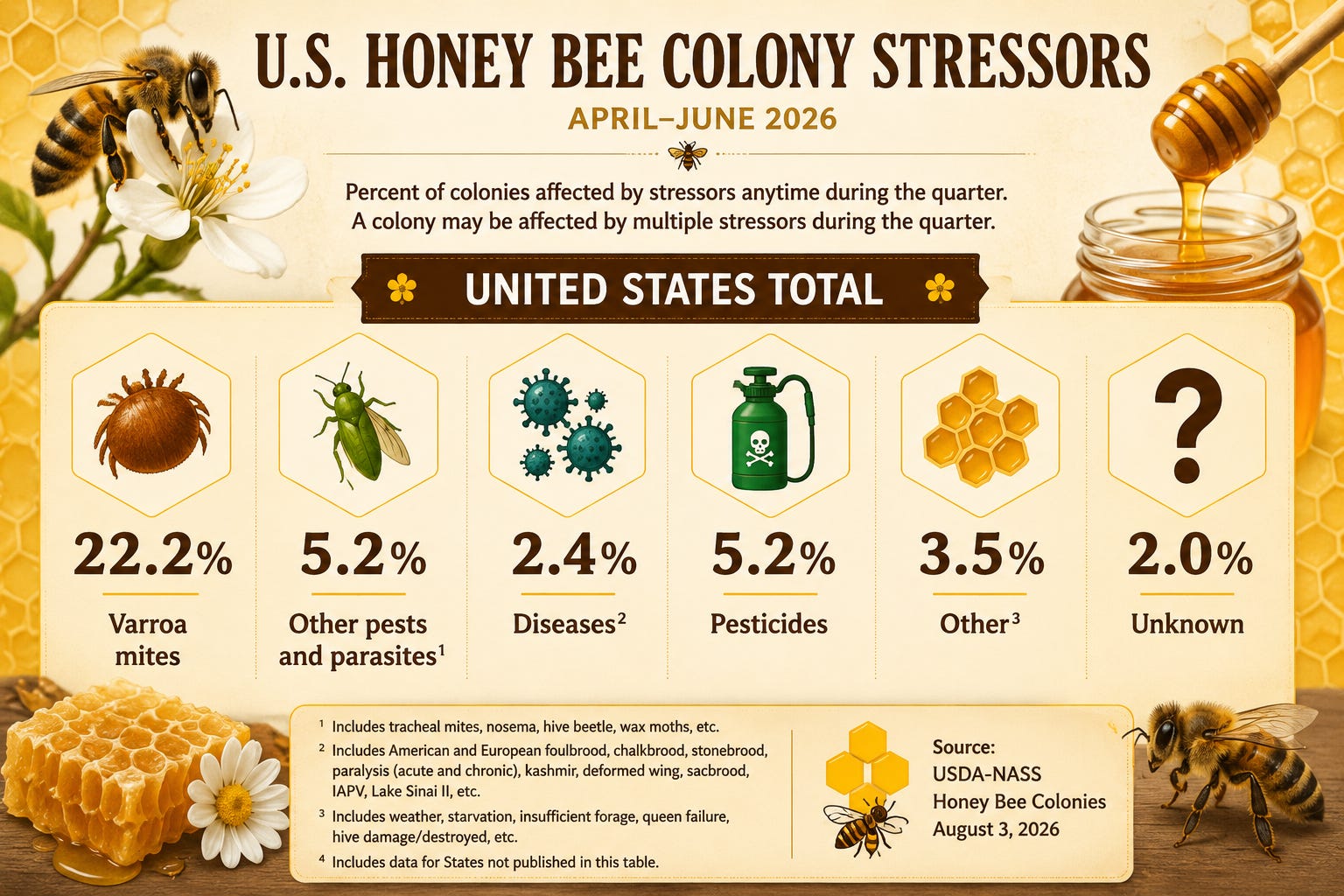
Disease (2.4%), other stressors such as weather and queen failure (3.5%), and unknown causes (2.0%) were reported less frequently.
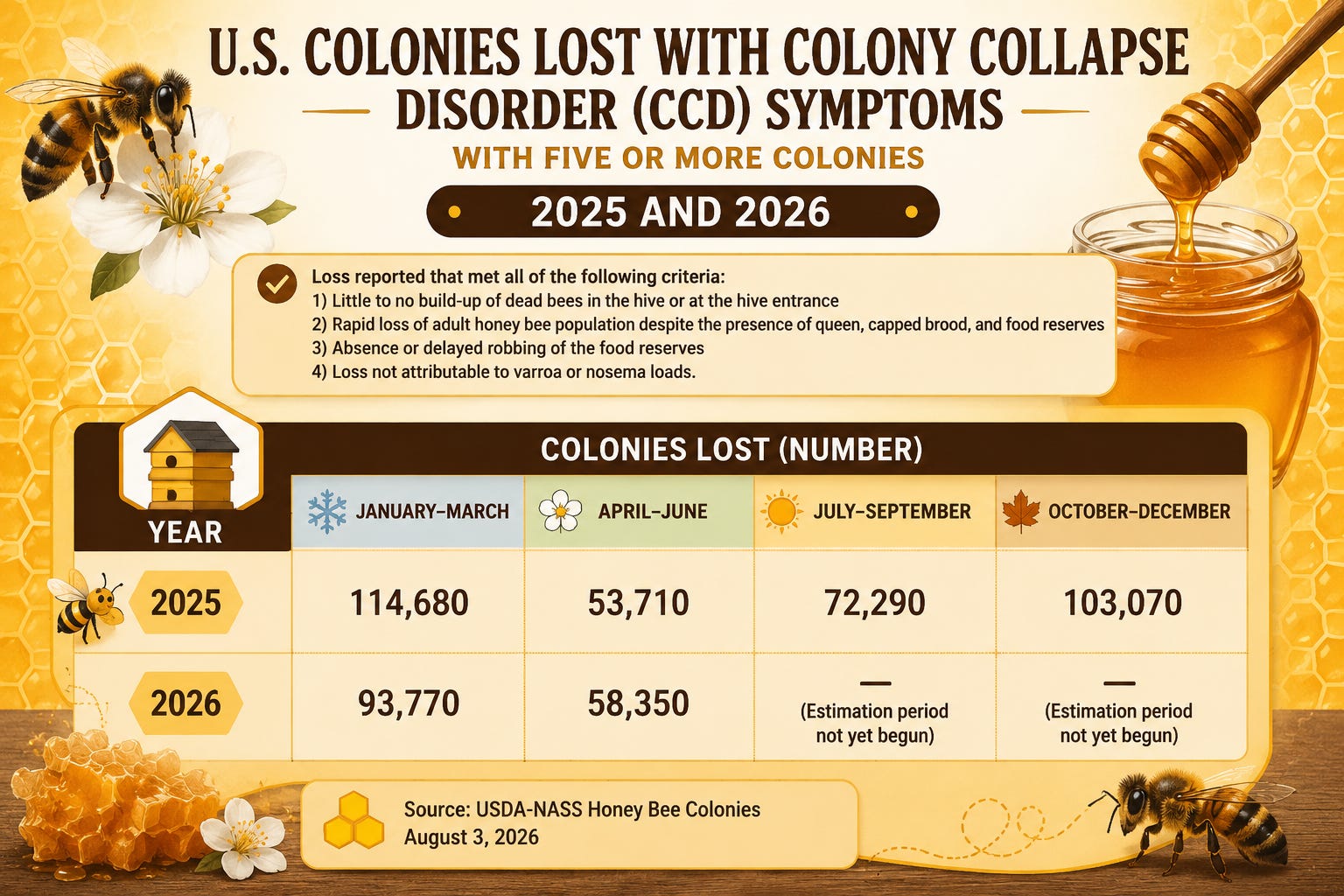
Reported U.S. honey bee colony losses exhibiting Colony Collapse Disorder (CCD) symptoms fell to 93,770 in the first quarter of 2026 from 114,680 a year earlier, before edging up to 58,350 in the second quarter from 53,710.